Showing posts with label client education. Show all posts

Friday, June 26, 2009

企业标语的诞生


方莺吟
董事
译力双语服务私人有限公司

记得2000年开始在新加坡当翻译员的时候,我的老板兼师父说了一则香港国泰航空企业标语的故事。当时,国泰的英文标语是‘Arrive in Better Shape’。顾名思义,当你乘坐国泰航空,下机时准不会让灰头土脸。可是这样一句很‘英文’的标语,如何以几个中文字将整个形象表达出来,而又不失文采呢?

这当然不是件容易的事,不然国泰航空也不会重金征集佳句了。后来一位老先生以一句‘航行万里,神采飞扬’捧走丰厚奖金。相信他在领取奖金的时候,肯定也神采飞扬,笑不拢嘴。

成功的企业标语不但深入人心,而且寥寥数字所展现的神韵,确实能为企业形象起着画龙点睛的加分效用。

跨国公司,尤其是以消费群众为诉求对象的企业,不但在选用企业标语时要慎重其事,费尽心思(甚至是大洒金子),而且还要找一个能跟英文版匹配的中文标语,才能旗鼓相当,互映生辉。比如汇丰银行的‘The World’s Local Bank’,中文版为‘环球金融,地方智慧’,堪称是这几年较为知名的精彩译文标语经典。

有些人会说,哇,才想几个字就能赚这么多钱,很好赚哦!其实好标语都得惜字如金,既要简单明了,又要耐看耐读,而且要做到‘说得更少,寓意更深’,如同大师挥毫一样,寥寥数笔就能把一个人物的形和神跃然纸上,真的很考功夫呀!如果一个不小心翻得不好,对企业来说可谓得不偿失。企业的品牌价值,何止千金。想一想,如果我们把花旗银行的‘Citi Never Sleep’翻成‘花旗不睡觉’,肯定会让人笑到喷饭。当然,这种事也不太可能发生(正确答案是:花旗从不歇息)。

以前当个看热闹的门外汉,读到一些经典的企业标语,总觉得:嘿,这么简单,我也可以翻得出来嘛。所以在3年前创立译力双语服务公司的时候,就拿自己的公司来开刀,想了一个自认为不错的标语:‘译出飞扬神采,展现企业魅力’,刚好把‘译力’两字镶在头尾,将创立语言服务的使命放在中间。

自从听闻那一则国泰航空的标语故事后,整整过了7年,才终于让我有机会为一家本地银行的企业标语抄刀。这家在新加坡拥有超过百年历史的银行,要展现一种‘始终在您身边’的亲切老邻居形象。当时他们的英文标语是‘Your Bank and More’。但是自己的功夫还是不到家,墨水也不够,所以绞尽脑汁也没法交出佳句。后来,还是客户自己想出一个相当不错的标语‘伴您成长,与您相随’。

看到最后出炉的标语时,坦白说,我真的心服口服。虽然中英两句并排放在一起,只有‘您’字对得上号,而More字则大有文章。它包含着‘陪伴’和‘相随’,既亲切又诚恳,完全是一种柔性而没有傲气的诉求。搭配这个标语的,是一个身穿金色制服且笑容可掬的年轻女职员,完全契合该银行的‘邻里银行’定位。

丢失了第一个机会,第二个机会来得比我想象中还快。半年之后,这家银行又换了第二个标语:Neighbour First, Banker Second。直译起来,就变成‘邻里第一,银行第二。’当然,这种口号式而老套的标语,根本不会被看上眼。有了前车之鉴,我基本上也大致摸清客户的诉求和风格。
在当时呈上的文案中,有一些是自己不甚满意,但也只能拿来凑数的几个标语。

邻里优先,银行为次。----- 意思最接近,但没有很强的Feel。
心系邻里,服务优先。----- 缺少感动人的元素。
邻里优先,贴近您心。----- 这些词都有点老了。

一个月后,偶然间到该银行办事,随手拿起最新的宣传册,打开一看,当初的其中一个标语就静静地列在左下角 – 深耕邻里,伴您同行。那一种成就感,我到现在还记得。

Corporate Blog of Elite - Professional Translation Services serving ASEAN & East Asia

Tuesday, June 16, 2009

Translation Prices: Cost of Translation and Localization Services

by: Argos Multilingual

No, it doesn’t start with an "S” or an "F” and there is no "Q” in it. This word in our industry is ‘cena’ and it is the Polish word for"price”. Translation prices is exactly what we’ll be examining here. Price is usually, as anyone and everyone knows, the defining factor for customers on whether to purchase, and the defining factor for producers on how to target their products to the client base.

What horrible secrets about Eastern European translation pricing will be revealed in this article? Probably nothing too revolutionary. Hopefully this article will expose some common sense responses to issues with pricing, and probably address several universal problems shared by all translation companies and localization service providers in the rest of the world.

1. ROI – ‘Don’t bother localizing if you can’t make a profit’

There is plenty of talk about localization ROI and how it affects pricing. The decision of whether it pays to localize something before you decide to enter a market sounds obvious. Why then do we see companies complaining about localization costs in the context of their ROI?

The underlying issue here is that companies are complaining about their products’ lack of competitiveness. It happens, there’s no shame in that. No matter how you slice it, it comes down to money. And if there is not enough demand backed by money for a product, then localization, in the eyes of management, doesn’t seem to pay off. If an application is designed for Eastern European end users, then it either has to be relatively inexpensive or should be tailored to a specific niche market where lower sales volumes give an acceptable return. The Eastern European software market will not usually generate huge sales based on its size alone anyway.

As such, localization decisions are often put on a back burner, and investment decisions are based on poor information about the market. The result - a company finds itself in Eastern Europe before it has properly estimated sales potential. Then, normal business processes come into play; managers are pressed to make a profit, and we see the localization problem handed over to the local distributor.

All of a sudden, a company that specializes in software distribution is responsible for the software publisher’s image and quality in the local market. Local distributors are often very small, with little infrastructure, inadequate resources and small translation budgets (coming out of their own small pockets). Nonetheless, localization responsibility for the product is suddenly literally dumped upon them. This imposes additional problems on the distributors not only associated with added incurred translation costs, but also the problem with answering questions such as: ‘how to localize’, ‘what agency to hire’, ‘how to go about adapting the product to this region’…

It all boils down to one simple fact, distributors usually lack the experience in localization, and that lack of experience will further result in declining sales numbers and added costs.

Software publishers fool themselves into thinking that it is so much in the distributor’s interest to do a great job localizing the product (ergo, the distributor will have an easier time selling the product) that they, themselves, don’t need to worry about it. However, distributors usually don’t understand the complex issues connected with localization. Even if a distributor does recognize what’s involved, the "simple, low-value added service” attitude toward localization services prevails. The real world consequences are poor-quality localization and serious harm to the software publisher’s image and brand.

2. What’s going on among the bigger buyers of translation/localization services?

What are the organizational structures of larger buyers of localization services, and how do they affect the price of translation? It seems as if Microsoft is getting its act together by limiting the number of vendors and giving the remaining more work. IBM and Oracle also seem to be well-organized in this respect. Unfortunately, there are other large buyers of translation and localization services that have not addressed the issue of centralizing or streamlining costs.

It is quite remarkable how some large buyers deal with this problem. Our translation company, Argos Translations, works with one particular client directly through two different offices and indirectly through three other localization companies. Of course, we are paid different rates, negotiated completely independently with each of these channels. And now the punch line: the rates we receive working through one localization company are 50% higher than what we receive working directly for the client. So where are the client savings? Where is the streamlining? What about consistent terminology? The value of working through a limited number of MLVs is understandable, but what is the point of doing it a little this way and a little that way?

How the biggest clients deal with their translation and localization is only one issue. Another question is how far these companies are willing to go to lower localization costs. Last year, our company was in negotiations with a very large global company to take over a large portion of their Slovak localization work. I am not going to name any names here, but suffice it to say that this is one of the elite, with over $50 billion in annual global sales. Since this was a large, long-term client, and there were significant volumes involved (mostly documentation), we decided to quote this client the extraordinary attractive localization / translation price (at that time) of Euro 0.12 per source word.

The company got back in touch with us to tell us that they really liked our experience and wanted to choose us, but they had an issue: price. We asked whether it was a question of 1 or 2 Euro cents, and they made it clear that the price would have to be "significantly” lower. It was obvious that we weren’t even close to their price expectations. They were looking for Euro 0.07-0.08! How is it possible that the rates being paid by this particular global giant were so low? How does this reflect upon our industry? The only answer I can offer is that such clients receive low translation prices at the expense of similarly low level of quality that they obtain.

3. Quality: does anybody really care?

I was recently dozing through a translation conference as one of the speakers, a professor of linguistics, was discussing the ethical importance of a high-quality translation. I was suddenly jolted awake by a statement he made along the lines of "it is the translation vendor’s ethical responsibility to ensure the highest-quality translation.” When question time arrived, I duly asked what we should do if our client does not give us enough time to do the job in an "ethically responsible” manner. The gentleman told me that it was our moral responsibility to ask for more time.

As good and applicable as his reasoning is, unfortunately it almost never applies in the real world. I tried to imagine the response that I’d receive if I were to call my client and suggest, "Listen, I know this is a 1.2 million-word project, but you really should have met your development schedule. And I know that your priority was to ship FIGS first, but this was delayed. And now, on top of all that, you want us to use this outdated TM software because this is what your previous version was in, yet the TM database we have received is full of inconsistencies that need to be removed before we start translating the new version. What it really comes down to is that we are only going to have time to do the translation and have it reviewed independently TWICE. This won’t be enough to maintain our ethical language standards.”

Unfortunately, the truth is (maybe I shouldn’t be saying this too loudly) that our business is full of concessions. It is a humorous concept, really, when you take into consideration that we are supposed to offer incredibly high-quality, incredibly fast turnaround times at incredibly low rates. Obviously, something has to give here, and I believe that the way localization services providers handle this contradiction is by diminishing the definition of excellence in our industry.

The best companies in our industry are the ones that have the best systems in place to provide the highest quality possible while trying to maintain costs at a level that does not hinder such quality, according to "real world” business conditions. Otherwise, we’re all familiar with the concept of ‘garbage in, garbage out’. It is that simple, really.

Corporate Blog of Elite - Professional Translation Services serving ASEAN & East Asia

Friday, June 5, 2009

Website translation as a way to promote your business abroad

By Elena Mokeeva,
SEM Consultant

e.mokeeva@e3internet.com

Today every self-respecting company understands the advantages and power of the internet and runs one or several web sites advertising its products or services online. We all want to be recognised worldwide and invest a lion's share of our budget in offline international marketing.

At the same time we often forget about the advantages of international internet marketing. All that we can think of is creating another .com website in English, adding the word "international" to its title. Why do we forget that one third of all internet users do not speak English, and thus our "international" site is passing by all this mass of potential clients (business partners)? With constantly growing quantity and quality of non-English material on the Net they are more likely to surf in their own language.

Today a multilingual website is becoming a necessity for international business due to a number of convincing reasons:

SEO Marketing. Multilingual web sites allow you to enter new markets. Local language search engines will index your site and give you new links from within this market area. In most non-English speaking countries, regional search engines in their native language play much greater role than English-speaking Google, Yahoo and MSN. Hence, you gain better positions, more new visitors to your site (i.e. more potential customers) and more sales.

Company Image.

Multilingual sites create an image of a serious and respectable international business, and will win over visitors from companies who have not made this effort.

Customer-centric approach.

It allows your visitors to surf quickly and efficiently in their own language. This gives your company and products an advantage over your less prepared competitors.

Now you clearly understand that website translation can be a great help in attracting foreign public to your business. However it has to be done in such a way that people will end up buying your product.

To have a website translated means much more than get mere text translation. There are numerous factors that have to be taken into consideration. Actually, it is more correctly to speak about website localisation, when you want the site successfully working in the market of your target countries.

Localisation is defined as modifying a product to make it usable and suitable to a target market.

First of all, it implies culture-centric translation. Perfect culture-centric translation makes the reader feel as if the content was not translated, but originally written in the target language. It takes into consideration the culture, style and language of the target audience.

Using electronic translations for this purpose is not a good idea. The decision to have your site translated by a human being, preferably a native speaker, familiar with the culture, terminology and sayings of the target language, is an ideal one.

Then, website localisation takes into account the appearance of your web pages. Are there pictures, colours or images that would cause offence? A good website translation company will analyse your site and offer you a cultural applicability consultation.

Further more, decent website translators will offer an after-care service that assists in helping you with the small changes in future.

Some translation companies will even provide you with internet marketing services to help your site achieve high visibility in the target country.

If you are serious about promoting your business among foreign internet users it is best to trust your website translation to proven professionals. The leading UK translation company, Lingo24 (http://www.lingo24.com) can supply your company with these services.

Professional website localisation and culture-centric translation can become a very promising perspective for your business.

http://www.lingo24.com/multilingual_website_design.html

http://www.lingo24.com/professional_translation.html

See the author's biography here: http://www.e3internet.com/company-information/biographies/elena/

Corporate Blog of Elite - Professional Translation Services serving ASEAN & East Asia

Friday, May 29, 2009

The Need for Translation Services In a Global Economy

By Shohreh Fleming

The pace of economic migration in the global economy is quickening and the voice of the world is becoming more cosmopolitan. As businesses, corporations and government bodies expand, the requirement for them to communicate with their evolving populous in a meaningful way becomes all the more pertinent, not to mention challenging and exciting.

If a country is to prosper it needs to engage with its population. Where a system for dialogue exists to serve a multi-cultural society, there will also exist a harmony of expression and application.

The birth of the internet has made a seemingly endless stream of information available to anyone who has access to a computer with a web connection. The internet is also vital for business. It creates a new arena where companies are able to showcase their particular products and services in fresh and innovative ways to new and diverse audiences.

From launching an ad campaign in Polish to translating an e-mail from a client in Moscow; the challenge of utilising the internet to widen the appeal of your company must be met, if growth and success are to form any part of an organisations agenda.

The presence of translation service providers on the net is yet another boon to the global economy; giving voice to ideas, plans and proposals the world over providing a much needed platform for far-reaching and meaningful communications with the rest of the planet. Aiming to create a bridge upon which ideas and communications can cross without obstruction, to pave the way for free, open and creative communications without boundaries or obstacles.

The advantages of language services on the broader global economy are perhaps not immediately apparent. But if a company, whether large or small, is to get involved with it's public in a meaningful way it needs to approach them in a manner that is conducive to them, not to marginalise them and therein reduce their presence in the world economy.

Companies express their cultural sensitivity by providing their diversifying customer base with materials tailored to suit their own languages. Indeed, for a company not to offer this kind of information would be short-sighted and not make good business sense.

The aim of any company or corporation is to offer the same high quality product or service to its expanding customer base. If that base consists largely of individuals from many different countries, then a solution needs to be found.

For example, a company sees a gap in a potential market for a new or existing product; the problem presented to them is simple; extending the message that their company wishes to express in a culturally sensitive and appropriate manner.

It would not simply be enough to translate an ad campaign into Albanian, Bambara or Chechen without an understanding of the kind of world your message is going to be heard in. Enter the translation services provider.

With the advent of the global economy the role of the translator is an almost indispensable one. The need for businesses to communicate with their client base means that there will always be a requirement for a translator.

This means a lot of work for professional language services: a company setting up a South-East Asian headquarters would need to overhaul the bulk of its commercial as well as training materials without losing any of its corporate timbre. Such an undertaking is costly and important to execute correctly from beginning to end.

Simply translating material would not be sufficient; a translator would need to know what kind of message the company is anxious to convey to their new client base and set the tone for the promotion or corporate identity. Certain symbols or ideas that are seen as the norm to one country may be highly offensive to another. In this manner, cultural sensitivity is extremely important.

So, the role of a translation services provider is not simply to transpose a set of texts or materials from one language to the next, but also to engage with the culture who speaks that language. In partnership with the business or government body, this creates an invaluable link to its population in order that it may speak openly and clearly to all.

About the author:

Shohreh Fleming is CEO and co-founder of Prestige Network Ltd., and Translation Services-UK.com.

Corporate Blog of Elite - Professional Translation Services serving ASEAN & East Asia

Thursday, May 28, 2009

At Arm’s Length or Close to the Vest? The Optimal Relationship between Clients and Vendors

By Anil Singh-Molares,
EchoMundi, LLC,
Bellevue, WA, U.S.A.

Anil[at]Echomundi.com
http://www.echomundi.com/

The relationships between vendors and clients go through their ebbs and flows (more insourcing, followed by more outsourcing, followed by…). As predictable as the swings of a pendulum, all of us - clients and vendors - go through our normal gyrations back and forth. And it is all in an attempt to find that elusive, but allegedly perfect, middle ground - but where is it? And beyond the question of where to place work (inside or outside), the question is more about the right tenor of vendor-client relationships--at arm’s length or close to the vest? The answer, I will argue, is both, in the right proportion.

While running vendor relations at Microsoft in the mid-1990s I developed that company’s "strategic localization partner" program. Through this program, many of the constituent companies of what would later become BGS, the Mendez group, and Lionbridge were developed with significant input from Microsoft: Opera, Translingua, Meta, Gecap etc… With only one notable exception, all of these companies were very successful in the nineties. The hallmarks of the "strategic partner" program that we established were designed to lower the barriers between vendor and clients by emphasizing common teams and objectives, and an approach of "if they succeed, we win" rather than "if we make the vendors fail, we win (as our jobs will be more secure)." We emphasized very tight communication links, virtual teams, frequent trips and training to each other’s sites, as well as bonuses and other incentives, such as guaranteed profitability in some cases. The proverbial "us and them" did not exist - rather we all belonged to the same team.

Did it work? Yes and No. Some Microsoft divisions embraced the concept, some rejected it. But the concept of vendors as extensions of client teams (rather than simple providers to them) did begin to take hold. And this approach yielded many notable achievements, particularly in the consumer space, for instance with the creation of Microsoft’s encyclopedia, where we had dedicated vendor teams worldwide for a period of 7 years. In this context, it is noteworthy that in those instances where we pushed the "close to the vest" concept, both clients and vendors achieved their common objectives: good quality at reasonable cost for the client, and increased profitability for the vendors. Similarly, instances where the "at arm’s length" concept was used invariably resulted in higher costs and lower quality for the client and significantly reduced profitability for the vendors. In addition, the "arm’s length" approach also produced considerable churn in the vendor base of those groups using this approach, as vendors left in frustration or were ousted in favour of the "next best thing."

Where are we today?

Before joining Microsoft in 1991 I ran a translation company in the Boston area. Now at the helm of Echomundi LLC, an International Services company, I find the contrast between my experience as both a vendor and a client instructive and informative in answering the question of how close vendors and clients have or should become:

What has changed:

* The industry is far more mature and professional. Localization as a discipline, rising wages and respect for language specialists, growing sophistication in tools and approach are all readily apparent. The process has been streamlined and codified to a large extent. Various CMS, TM and Project Management tools have also helped reduce costs and increased consistency.

* As a rule, there also appears to be more frequent contact between clients and vendors, more training sessions, conferences, meetings, trips etc.

* However, many types of interactions between clients and vendors now seem principally driven more by increasing efforts to "measure and quantify" quality, productivity etc. In this context, the notion of "Service" is now largely defined as success in meeting the client’s metrics on a job to job basis (as indeed we are all measured one job at a time), and not as much on creative problem solving, flexibility, adaptability, transparency and innovation.

What remains the same:

There are certain limitations inherent in the client-vendor relationship that cannot be overcome. That is, when one party pays the bills it has the right to set expectations of service as it deems fit. Conversely, once they have accepted the terms and conditions of a particular client, service companies have an obligation to respond to their client’s requirements to the best of their ability. This fundamental axiom is unchangeable.

And now to return to our basic question: At Arm’s Length or Close to the Vest?

The "Arm’s Length" approach in its ideal application has obvious benefits: each party treats the other as a professional entity, there are clear expectations and deliverables, an optimized use of technology, and tightly controlled costs and profit margins. The downside, however, is glaring: if you as the client don’t develop strong and lasting relationships with your vendors, they won’t be your vendors for long (either because you will tire of them or they will tire of you). By maintaining too much distance from your vendors, they are never motivated to really integrate with your approach. In short, they can become clinical and dispassionate (if not unmotivated and indifferent). One additional drawback of this approach is that it also easily lends itself to bureaucracy run amok, where it can become more important to "follow the rules" than to "get the job done" - surely self-defeating.

The "Close to the Vest" approach in its ideal form seeks to eliminate the barriers between clients and vendors. Through frequent interaction, joint training, and team building the vendor becomes an extension of the client’s team. Both parties share the pains and rewards of individual projects. Both put themselves on the line to a greater degree in innovative problem solving and troubleshooting. And by building relationships for the long haul, the investments that each party makes in the other are more resilient. The downside to this approach, however, can be possible "subjectivity" in measuring work and an unwillingness of one party to honestly hold the other party accountable when mistakes occur.

The Ideal

Really what we all (clients and vendors) want is a combination of both the "Arm’s Length" and "Close to the Vest" approaches - that is, deliverables and costs that can easily, objectively and professionally be measured on the one hand, combined with cordial personal relationships, which are essential for effective problem-solving, on the other. This "middle ground" will vary according to the individual requirements of clients and the capacity of the vendors that they select to meet those requirements, but it is clearly a combination of the benefits of both approaches.

Clients and Vendors that hew to this joint approach will find increasing satisfaction in their relationships on all levels: quality, cost, profitability and service. In this context all of us should strive to be "understanding professionals" rather than exclusively one thing or the other.

Born in Holland and raised in Europe and the United States, Anil Singh-Molares is a global citizen, a global entrepreneur and businessperson. From 1991-2003, Anil worked as a Senior Director at Microsoft Corporation, where he implemented Microsoft’s "strategic localization partner" program. Since leaving the software giant, he founded and serves as CEO of EchoMundi LLC, a rapidly growing international services firm that helps corporations do business abroad. He can be reached at Anil@echomundi.com.

Copyright © 2006 Anil Singh-Molares. All rights reserved.

This article was originally published in GALAxy newsletter:
www.gala-global.org/GALAxy-newsletter.html

Corporate Blog of Elite - Professional Translation Services serving ASEAN & East Asia

Wednesday, May 27, 2009

Translations.com – Alchemy Merger Story

By Tony O’Dowd,
CEO and President - Alchemy Software Development

By Phil Shawe,
Co-founder of TransPerfect,
President and CEO of Translations.com

By Keith Becoski, ClientSide News

www.translations.com

CSN: Tony, I saw it mentioned that the purchase process for Alchemy was a competitive situation and that Translations.com was the high bidder. Was there anything else driving the Board’s decision besides maximizing their investment?

TONY: There were a number of factors that drove this decision from our side. For starters, Translations.com is one of a few localization service providers that invest heavily in technology solutions. It was also important to us that we brought something complementary to the table. While Alchemy is a market leader in delivering next-generation TM technology to over 80% of the world’s leading technology companies, Translations.com boasts one of the most widely-adopted workfow platforms in GlobalLink. Since there’s little cross-over in functionality, integrating these two technologies will be rapid from a development perspective, yet powerful for our combined clients. Lastly, Translations.com’s track record of executing successful industry mergers, retaining virtually 100% of staff and clients, and supporting incoming entrepreneurs as they continue to operate their divisions autonomously, also helped us to solidify our decision to merge.

CSN: Phil, what was it about Alchemy that made Translations.com stretch a bit fnancial-ly to make this merger a reality?

PHIL: First and foremost, our mergers are about the people. With Tony, co-founder Enda McDonnell, and the rest of the Alchemy team, we saw a talented group of localization technology veterans who shared our focus on innovation, growth, and client satisfaction. Beyond the wealth of technology talent, Alchemy’s proven and proftable business model is unique among the localization industry’s technology providers. While Alchemy’s leadership in the Visual Localization Tool market is well-established, it gave us extra comfort that we’ve relied on Alchemy technology internally for over five years and have first-hand experience with how effectively CATALYST streamlines the localization process. Lastly, it’s not only Alchemy’s past achievements that impressed us, but also its prospects for the future. We’re very excited to be building on Alchemy’s success and investing in future Alchemy software product offerings.

CSN: Tony, you’ve stated that you intend to stay on with the business post-close. As a shareholder of Alchemy, who has now seen a return from that investment, why stay aboard?

TONY: I’m way too young to think about simply hanging up my hat. What would I do? So the motivation for me in doing this merger was more about opportunity than it was about exiting and doing something else. While I may not have always enjoyed all of the administrative tasks associated with running a company, I have been in the localization industry for 22 years and I’ve always enjoyed it immensely. So for me, the decision to stay on and to be part of driving the growth and development of one of the world’s premier players in this industry is an easy one. And as Phil said, it’s all about the people. My due diligence about the people I’d be working with, as well as the spirit of the merger discussions themselves, led me to believe that this is an interesting and talented group of people for me to join up with.

CSN: And why do you feel this move is right for Alchemy clients?

TONY: Again, Translations.com and Alchemy can combine our R&D spend and deliver more innovative technologies for our clients. Translations.com is a proftable, private company with a very healthy Balance Sheet. In other words, our clients can be confdent that when they are making an investment in technology, they are doing so with a partner who has consistently been fnancially stable. Not motivated by meeting quarterly numbers for the public markets, Translations.com has the advantage of being long-term focused and, as part of our transaction, has pledged long-term investment in Alchemy R&D. Additionally, the combination of our technology with the GlobalLink GMS product suite will enable our clients to achieve greater levels of effciency and scalability in their localization processes. I also believe Translations. com’s post-merger history of retaining employees, management, and clients also makes this the right move for our clients.

CSN: OK, but you’ve failed to touch on the issue on everyone’s mind, what about the loss of independence?

TONY: Our clients value innovation more than independence. Alchemy will operate as an independent division within Translations.com and will continue to develop, distribute, and support our own products. Additionally, the senior management team, such as me and Enda McDonnell, will remain in our existing roles, continuing to exercise our leadership and vision over Alchemy CATALYST and Alchemy Language Exchange. Unlike recent localization industry acquisitions which resulted in large-scale layoffs, we shall be investing in and expanding the development efforts at Alchemy and launching new and exciting technologies later in the year.

CSN: Generally, though, the technology in this industry does seem to be getting gobbled up by the service providers. Who benefts from this?

TONY: Speaking about the Translations.com/Achemy deal, our clients are the ultimate benefciaries of this merger. Technology is playing an increasingly important role in the optimization and effciency of our clients’ localization processes. Even small and medium sized companies see growth opportunities in overseas markets. To take advantage of these growth opportunities they need to localize quickly, cost-effectively, and with high quality. Technology will drive these effciencies making localization more accessible to a wider range of companies and enterprises.

Combining these technology advantages with a full service offering will suit some of our clients. However, we are mindful of the fact that choice is important to many of our clients and that is why Alchemy will remain a fully independent division within Translations.com and our tools will continue to be service provider agnostic.

Because we don’t have overlapping technology, our clients do not need to be concerned about which product lines will be supported in the future, and which will be killed off. Stability, security and a defned roadmap for future development for our combined software offerings will also work to the beneft of our clients.

CSN: What do the language service providers need to know about this and what do the end clients need to know?

TONY: Probably both groups need to know the same things. Alchemy has developed CATALYST into the optimization tool of choice for the localization process, and this development has served all who manage localization, whether they are an LSP or an end client. So what all localization stakeholders need to know is that Alchemy and Translations.com intend to work together collectively to continue investing in and driving the evolution of CATALYST and Alchemy Language Exchange, which are not captive and are used in conjunction with other LSPs’ services.

PHIL: We also feel that increased competition in the localization technology sector will drive more innovation, and this transaction is likely to result in increased competition.

CSN: Phil, how will this merger differ from the SDL/ Idiom merger which is leaving a perceived lack of independence and choice?

PHIL: Translations.com has a reputation of merging with companies and retaining virtually 100% of the entrepreneurial skills and enthusiasm of the existing teams and management. This has proven to be a very successful strategy. While I don’t know that it’s accurate to say that this approach to M&A is unique, it certainly does differ from the approach of SDL, the obvious comparison here given their recent and past technology acquisitions. In fairness, they are a public company with a requirement to operate and to consolidate acquired businesses in a way that makes sense to investors. As a private company, Translations.com is free to take a more long-term approach, and we see the value in supporting entrepreneurs and their businesses.

Furthermore, the Alchemy/Translations.com merger differs from – again the natural, but not entirely analogous, comparison – SDL/Idiom, in that this merger has not manifested a direct contradiction of a promise. Many clients and partners asked Idiom directly if they intended to sell the company to a service provider. Idiom sold their solutions on a promise to remain independent. Alchemy made no such promise because, without the same access to confdential partner information that is inherent in the way WorldServer functions, there was never any reason for CATALYST to be sold with a pledge of independence.

CSN: How has the recent SDL/Idiom merger affected Translations.com?

PHIL: As far as companies performing services through an Idiom platform, Translations.com is probably among the largest in the world. However, you never saw a public partnership announced. One reason is that Idiom competes directly with our GlobalLink suite of products. However, another reason was that we felt we couldn’t predict the future actions of venture capitalists that controlled Idiom, and envisioned the potential of them selling out to a competing LSP.

Now, of course we’re concerned that SDL has, in effect, purchased our pricing information and other knowledge we once considered confdential, because it is stored on Idiom servers. As there is nothing legally preventing SDL from making use of this information to compete for service revenues, we expect them to cross-sell aggressively into those accounts.

When you step back and think about it, Idiom was losing over $5 million a year and SDL has competing and overlapping technology, so why buy the company for over $20 million? It may be that the real value in the deal for SDL shareholders is simply the future ability to cross-sell more services through 1) the built-in dependency and high-switching costs associated with being a technology vendor and 2) the access to once-confdential proprietary competitor information.

Note that there is nothing “wrong” with what SDL is doing by pursuing this strategy. Quite the contrary, having spent $20+ million of their shareholders’ money, they now have a fduciary obligation to maximize that value, and make the most of their new-found client relationships and competitor information.

After the Idiom deal, we feel how we’ve always felt about SDL: their technology is primarily about three things; a Trojan Horse with which to establish diffcult-to-break relationships to better sell services, an image necessary to fetch them a higher valuation in the public markets (i.e. a software vs. services valuation), and a vehicle that they’ve quite cleverly used to get competitors to help fnance their R&D and operations.

In summary, we respected SDL as a tough competitor before they bought Idiom, and we expect them to continue to be a tough competitor. As always, we look forward to the challenge of going head-to-head with them in the marketplace, on both services and technology.

CSN: So Tony, what’s the “real story” in terms of value to the market place? How and why will this be a positive alliance for the industry?

TONY: The ‘real story’ is about offering choice. Our clients want to manage their localization content more effciently across multiple localization service providers. A solution that is vendor agnostic, using web based architecture and built on open standards that offers enterprise level scalability is key to their continued growth. This is where Translations.com and Alchemy have invested heavily over the past few years.

CSN: Phil, what does this merger mean in terms of your competitive position?

PHIL: Over the past several years, Translations.com has been fortunate enough to be one of the fastest growing players in the localization industry. Enterprise localization clients are increasingly aware of the value we bring to the table. With the addition of a market leader such as Alchemy, we expect to see this trend continue.

ClientSide News Magazine - www.clientsidenews.com

Corporate Blog of Elite - Professional Translation Services serving ASEAN & East Asia

Monday, May 25, 2009

Translation Buyers' Views on Technology Independence

By Ben Sargent,
Senior Analyst,
Common Sense Advisory

In late mid-2008, Common Sense Advisory asked buyers of translation services for their views on technology independence among their software and language vendors. Over half the 30-plus respondents hailed from North America; 35 percent were from Europe; the balance were scattered across that amorphous continent known as "Rest of World."

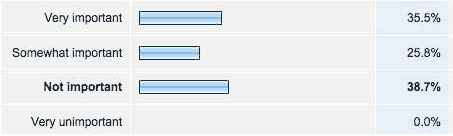
Our first question asked, "How important is it for your technology vendor to be a different company than the firm that provides translation services?" About 60 percent said technology independence was "somewhat important" or "very important."


Source: Common Sense Advisory, Inc.

Stated more bluntly, we were asking buyers what they felt about using technology tied to a specific language services provider (LSP), such as Lionbridge, Sajan, SDL, or Translations.com. Given the high proportion of "very important" responses coupled with zero buyers stating "very unimportant," the balance of opinion among buyers tilts radically toward concern on this topic, even though 39 percent said it was "not important."

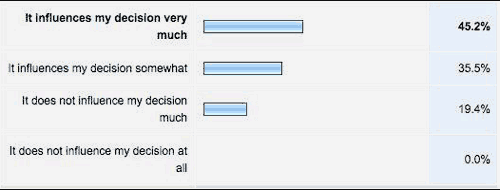
Next, we asked buyers if a guarantee of independence from the vendor would influence their purchasing decision. Over 80 percent indicated that it would.


Source: Common Sense Advisory, Inc.

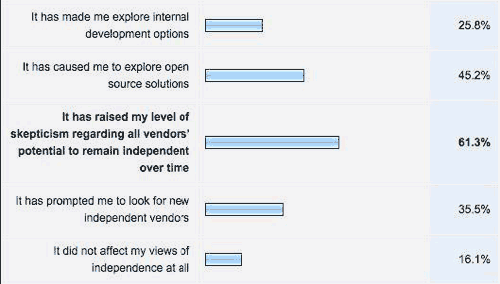
Expect non-service vendors to take advantage of this buying criterion, in both marketing platitudes and in the more hand-to-hand combat of direct selling. However, not all buyers will take such promises at face value. Last year, two notable independent software companies, Alchemy and Idiom, were swallowed by large LSPs (Translations.com and SDL, respectively). When we asked how recent mergers and acquisitions (M&A) had affected their views regarding vendor independence, 60 percent of buyers told us industry consolidation had raised their skepticism about any vendor's ability to remain independent over time.

Other reactions included 25 percent who said they were pushed to explore internal development options; 35 percent who set off to look for new independent vendors; and 45 percent for whom it triggered an exploration of open source solutions. Only 16 percent say the consolidation did not alter their views on vendor independence.


Source: Common Sense Advisory, Inc.

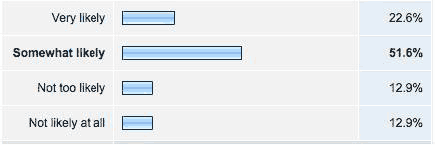
But apparently many companies did not need M&A activities to trigger their interest in open source. When we asked if it was likely their company would use open-source software for translation automation projects, nearly three out of four said they are "somewhat likely" or "very likely" to do so. This receptiveness could bode well for an open-source Global Sight — if Welocalize succeeds in mobilizing a community and eliciting a sense of ownership beyond itself.


Source: Common Sense Advisory, Inc.

Fewer companies are developing their own solutions for translation automation. Half said they were not, 30 percent said they were, and 20 percent claimed to be thinking about it.

Translation Buyers' Views on Technology Independence

Source: Common Sense Advisory, Inc.

So, our survey comes down to two conflicting datapoints:

* Our research on translation management systems (TMS) shows that most high-scoring systems are offered by language service providers, not by independent software vendors (ISVs). Suppliers such as Lionbridge, Sajan, SDL, and Translations.com are not only LSPs, but leading proponents of TMS in the openly available enterprise or captive "house" categories (house systems are available only through service agreements with those LSPs).

* However, buyers unequivocally tell us they worry about vendor independence and that it affects buying decisions.

This cognitive dissonance explains the difficult selling environment that LSPs find themselves in when pushing their proprietary technology approaches. And why unaffiliated software vendors have clay feet when it comes to the question of independence. Across, Beetext, and Kilgray have no financial ties to LSPs — yet. Maybe these new players will be the ones who finally turn the corner and prove that ISVs can survive in this service-oriented marketplace. But over the last decade, LSPs have harvested pretty much every leading software vendor in the space — more than 10 companies in all. Common Sense Advisory anticipates that acquisition by an LSP is still the most likely "exit strategy" for any globalization software vendor (GSV) operating today.

Published - April 2009

ClientSide News Magazine - www.clientsidenews.com

Corporate Blog of Elite - Professional Translation Services serving ASEAN & East Asia

Saturday, May 16, 2009

10 irresistible potholes writers find on the road to globalization, part 1

By Mike Dillinger, PhD,
Translation Optimization Partners

Optimizing the translation process has two basic components: improving the writers’ source texts and improving the translators’ process. For the moment, we’ll focus on the writer’s job.

Dear Translator: Please remember that most writers never had any training at all about translation and usually know one lonely language. Many of them can only rely on the limited writing advice that they got in school. They’re never aware of how they can make life hellish for translators and for international readers. So, don’t blame them; help them out. Pass this list on to them and discuss it until they understand.

Dear Writer: Become a hero among your company’s translators. Every improvement you make is multiplied by the number of grateful translators you help. This list is for you.

What follows is the first half of the list. The second half – in the next issue – pinpoints more and more detailed problems.

PothHole #1. Thinking that your original source text is the final product.

Translation takes a long time, so it is very important to budget enough time for converting files, translation itself, desktop publishing, re-doing screenshots, interface localization, etc. “Express” translations are done with shorter-than-usual deadlines and cost two or three times more than regularly scheduled translation jobs. We’ve come across translation vendors who very happily report that the majority of their work is from writers who couldn’t get their schedules organized. Writers who are pressed for time also hit many more of the potholes listed below and that makes translation even bumpier than usual.

Similar problems show up when we use MT to speed up translation. Shorter deadlines mean that there’s less time available to tweak the MT engine for a given job. So, in this case MT makes more mistakes and requires more time for editing.

Remember that your final product is the full set of documents, in the source language and in all of the target languages.

PothHole #2. Assuming that your files will work everywhere.

Translators are generally well organized folks and focus on optimizing their efforts. So, the first thing they do is take your original files and run them through translation memory (TM) software to see if any of your sentences were translated before. That’s easier said than done. If your files are in some FrameMaker, Word, or other proprietary format (i.e., not an open standard like HTML or XML) then translators will have to convert them. According to Murphy’s Law, your specific version of the authoring software will not be completely compatible with the specific version of the translators’ TM software. So, translators have to check and fix your converted files by hand, one by one. Remember those extra line breaks that you added to improve the formatting? Well, they really interfere with converting your files. The translators will charge you for all that unpleasant work by the hour, often for each language – on top of the price for translation itself.

Using the wrong file formats will make translation slower, more expensive, and more error-prone. And this is work that the translators will have to do all over, again and again, for the next versions of your documents.

PothHole #3. Using screenshots for eye candy.

Many translators specialize in translating manuals for software products, which often contain lots of screenshots. And the screenshots look really nice. But screenshots are very difficult to translate! For one thing, it’s hard for translators to figure out exactly how to see the same exact screen so they can take a new screenshot in the target language. This is doubly true for error messages, which are hard to produce on demand in any language. Often, localization of the software itself hasn’t even been finished yet (usually, a different team is working on that) so the translators working on the manuals don’t have the target-language product in front of them. Sometimes they have to edit the image by hand to cut and paste and draw in the translated words – even if the words have nothing to do with what the screenshot is supposed to illustrate. So, the translators have to painstakingly re-create your screenshots by hand, one by one. They’ll charge you for that by the hour, for each language – on top of the price for translation itself.

Think again: do you really need all those screenshots? Using too many screenshots will make translation slower, more expensive, and more error-prone.

PothHole #4. Thinking that your page layout will look the same in every language.

Translations in many European languages take up about 20% more space on the page and some Asian languages take up less space than English. If writers don’t leave a lot of white space in the original, then the translators have problems. If translated content spills over to another page, then either the layout has to be re-done by hand for each language, or the pages have to be re-numbered (everywhere!), or both. Once again, translators will charge you for that by the hour, for each language – on top of the price for translation itself. And this is work that they’ll have to do all over, again and again, for the next versions of your documents.

PothHole #5. Trying to make your writing “interesting”.

In high school, our English teachers wanted us to produce more “interesting” writing. They wanted us to use different kinds of sentences, phrase things in different ways, and even play with words. And this is how we’ve seen writing taught in other languages, too. This is a fine approach for producing literature that native speakers will read.

However, this approach makes life very difficult for translators, in two different ways. On the one hand, translators usually read English as a second language, so they don’t know as many of the nuances as a professional writer does. That means that the translators sometimes think that different phrasing has different meaning and they often have to sweat to render the (probably unimportant) difference in the target language. On the other hand, phrasing the same information in different ways means that you also have to pay for it several times. Remember the TM software we mentioned above? If you stick to the same phrasing for the same information, the software will see that and you’ll get the second and later translations of that information (almost) for free.

Similar things happen with machine translation. MT can translate many kinds of sentences very well. However, Murphy’s Law strikes when writers use varied phrasing: it’s much more likely that they’ll produce sentence types that machine translation simply can’t handle. That in turn means more editing effort and longer delays in translation.

Translating technical information about an unfamiliar product is a big challenge and an even bigger responsibility. There are several easy things that writers can do to simplify things, and the writers who do them will bask in the glory of translators’ undying gratitude. More potholes are ahead in part 2.

* Thanks to my consulting partner, Laurie Gerber, for the great title and for many suggestions.

Published - May 2009

ClientSide News Magazine - www.clientsidenews.com

Corporate Blog of Elite - Professional Translation Services serving ASEAN & East Asia

Friday, May 15, 2009

One project/many languages: A step-by-step guide to a stress free job

By Olga Pechnenko Kopp,
McElroy Translation Company,
Austin, Texas 78701 USA

quotes[at]mcelroytranslation.com
http://www.mcelroytranslation.com/

Does this sound familiar?

Your company has just developed a new idea for a new product. The product has passed the research phase, which required a considerable investment of time, people and money. Your company has calculated the developmental cost and developed a promotion plan. You, the product manager, know that all of your carefully crafted marketing copy, originally written in English, will require translation into all of the languages spoken in your company’s international target markets. Even though you fully understand the importance of this, the process of new product development has consumed all of your time. You’ve started the countdown for the release date of the new product and then you suddenly remember, “ooops, I forgot to translate the marketing and product information!”

How many languages were there again...? 10? 12? 21?

You are confident that your translation vendor will be able to complete all of the necessary translations in time—after all, there are only a few documents that need to be translated. So, you call your translation vendor’s account representative, and she tells you that it will take at least two weeks to complete the entire translation. “Why!?” you ask.

She tells you that those few documents you sent her contain approximately 20K words, and your project will require extensive rewrites due to its heavy use of marketing jargon. You don’t understand—how is it possible? You decide to call a few other translation vendors, and they give you the same answer. You start to panic because it looks like the product will not be released on time, and you are going to be responsible for the delay.

Shall we rewind?

Let’s rewind this potential nightmare and see if you could have a less stressful time dealing with THOSE translations. Below you will find a step by step guide to a stress free translation project into multiple languages.

Let’s say you have a 20K word marketing project. A translator can translate, on average, 1500 words/day. This will require 13 working days for the translation itself. Add an additional 2-3 days for editing. Include at least one business day for project management and QA. For a translation project of this size and type, allow for at least 17 business days. Of course, each project is unique and requires an individual analysis.

* Start thinking ahead. Translation is performed by humans and they will need some real time to work on your project. Note the formula at the right to see how the size of the projects affects the delivery.

* Write your copy with an international audience in mind. Have your technical and marketing writers create copy that has consistent terminology and avoids complicated sentence structure. Translators will be able to finish your project in an accurate, timely fashion if the meaning you are trying to convey is clear.

* Involve your translation vendor at the first stages of the project. Contact your translation vendor as soon as you know some translation will be involved in your project and give her the approximate date of the release, the target locales, the anticipated volume of words, etc. The more detailed information you can provide about the project, the better she can help you.

Further ways to lower your stress level at translation time include:

* Maintain all of the editable files in easily accessible, logical directory trees, and keep track of who authored and revised the content. Web help content, for instance, cannot be optimally translated if your translation vendor only has a website URL to retrieve it from. Likewise, PDFs cannot be optimally edited or translated without the original source files from which they were created. Do you want to find yourself at the end of a project on the phone with your web and technical documentation team trying to track down HTML and Quark files?

* Keep track of all of the artwork and its editable versions in a similar fashion, especially the ones that contain text. The same rule applies here. If your translation vendor has to re-create graphics from scratch because you can’t find the original Illustrator files, this will add considerable time and money to your project.

* For reference purposes and ensuring terminology consistency in the translation, maintain a glossary of specific terms that your company internally uses. While your translation vendor should have specific subject matter experts available for your project, who thoroughly know your industry’s terminology, if you have acronyms and terms specific to your product offerings, these may require translation and explanation to your international audiences.

* If you plan on requesting an in country review (i.e., an independent review by one of your regional offices, for instance) post-translation, begin planning for it at the start of the project, as it will affect the time needed for the project to be completed. Of course, let your translation vendor know you intend to have the content independently reviewed.

* Don’t send the draft of your documents—wait until the final version is available. This saves you money and time!

* Remember that it is possible to assemble a team of multiple translators for big projects to shave days off of the turnaround time—but the consistency of the translation increasingly deteriorates with each additional translator put on a project.

* For large projects we recommend you develop a translation glossary—before submitting the final version of your content for translation, create a list of key words and phrases to be translated first, and then ask your regional offices to review the glossary. This procedure alone could save you a lot of time in the long run, and allows the regional offices to have input into the process at the beginning.

Obviously, this is a general list that can be applied to a variety of projects where multilingual content is a necessity. Each individual project, especially a larger, time-consuming one, will have its unique problems, goals and criteria that will allow for modification and customization of this list to meet those specific needs.

I hope that this list will help you make your next project less stressful, and help you plan for a successful international product launch. If the best of plans go awry and circumstances beyond your control create a scenario that is less than ideal, at least you have good information to understand the challenges that you and your vendor will face. I am here to answer any further questions you may have and ensure your success with projects of all shapes and sizes. (Send all of your queries to Olga, your “stress free translation project expert”)

Corporate Blog of Elite - Professional Translation Services serving ASEAN & East Asia

Thursday, May 14, 2009

Just how literal do you want that translation?

By Dr. Mark Ritter,
McElroy Translation Company,
Austin, Texas 78701 USA

quotes[at]mcelroytranslation.com
http://www.mcelroytranslation.com/

McElroy Translation is often immersed in the language translation that is generated by patent prosecution and patent litigation. In this article McElroy Chief Editor Dr. Mark Ritter applies his dry wit to the questions of when to provide a “literal” translation.

From time to time translation agencies receive requests for a “literal” translation. This seemingly inoffensive adjective is much like the term “obscene.” No one is quite sure how to define it, but we all know it when we see it. When a literal translation is explicitly specified, an agency specializing in intellectual property translation reacts somewhat like a minister who is asked to preach a religious sermon: “that’s the only kind I know.”

Clearly one thing that “literal” means is “don’t embellish, don’t summarize,” a fundamental principle for IP translators. Sometimes, however, a totally straightforward translation fails to convey the meaning. Consider, for instance, a common disclaimer on the title pages of many German patents: “Die folgenden Angaben sind den vom Anmelder eingereichten Unterlagen entnommen.” [The following information is taken from the documents submitted by the applicant.] When I first encountered this sentence my reaction was: “Where else could it come from—the patent fairy?”

It seemed like just one more piece of meaningless bureaucratese and I went on to the real job. I later observed that this notice appears only on published unexamined applications that have been typeset in the standard eye-destroying minuscule font of the German Patent Office, rather than being published as a photomechanical reproduction of the original typescript submission. Then it made sense—it is a reminder that, although this may look like a granted patent typographically, it has not been edited. A less literal translation such as “The following information is published in the version submitted by the applicant” is equally accurate and more informative.

Sometimes a “literal” translation provides too much information. A conscientious translator may feel bound to translate every word, no matter how peripheral to the basic subject matter. Did the requester really want the phone numbers and addresses of all 14 branch offices of that foreign patent office? On a somewhat higher level, differences in the structure of source and target language may interfere with comprehension if the translator takes a slavishly literal approach. In translations of Japanese patents, for instance, one often encounters phrases such as “the fluid passes through between retaining walls 3 and 4.” Even if there are two prepositions in the original, one will do quite nicely in English. The art of translation is to convey the meaning as precisely as possible without distortion by the grammatical peculiarities of the source language.

Similar problems occur in languages that allow the formation of new compound words almost at will. In an attempt at extra precision, the Japanese or German patent attorney writes, literally, “a windshield wiper motor used to operate a windshield wiper arm supporting a windshield wiper blade for wiping the windshields of motor vehicles.” If “wiper motor” and “wiper arm” are the accepted terms of art in English, there is absolutely no loss of information from adopting these less literal alternatives. A good technical translator will not ignore how the translation reads, but will reluctantly accept something less than beautiful prose if the job requires. This is what I believe customers mean when they ask for a “literal” translation.

With translations as with prayers, it’s always a good thing to think twice about what you wish for. You just might get it.

Corporate Blog of Elite - Professional Translation Services serving ASEAN & East Asia

Wednesday, May 13, 2009

Does Sending Source Files Make That Much Difference?

By Susan Andrus,
Production Department,
and
Lisa Siciliani,
Localization and Marketing Manager,

McElroy Translation,
Austin, Texas 78701 USA

quotes[at]mcelroytranslation.com
http://www.mcelroytranslation.com/

The Short Answer

It just may. You should consider certain factors when deciding how much effort to spend finding source files that aren’t readily available. You may save translation turn time and/or money by providing electronic source files if you have:

1. Complex document formats, such as forms, brochures, indexed manuals
2. Web site or other online files
3. Editable text-containing graphics files
4. Duplication benefiting from use of a translation memory tool

A little background will help you understand how the situation has changed significantly for most translation and localization vendors. Just five years ago, most client document files that were to be translated into English were sent to agencies in hardcopy or PDF only. With the limited ability of scanning software at the time, these files were either provided to the translators in the original format or a considerable amount of time was spent to create accurate electronic source files.

Complex Document Formats

If your project consists of 1) just a few documents that are 2) primarily straight text with little formatting and 3) few graphics and 4) you don’t care about the format of the translated file, skip to the next section. If, on the other hand, any of the above apply to your project, stick around.

1. Saving even one hour of formatting time per document multiplied times dozens of documents can save hundreds or thousands of dollars.

2. Although our Production Department loves desktop publishing (they really do), recreating forms, complex manuals or marketing material from scratch does take time. When a PDF is converted to an editable file all of the formatting is lost.

3. See the section on editable graphics.

4. Sometimes a document needs to be formatted like the original because it will be published or because the content requires formatting in order to be used—imagine an unformatted form.

Web Site or Other Online Files

To start with, sending organized source files can make a huge difference in how accurate the estimates are that you receive from various vendors. Unless your web site is small and very simple, there is information affecting the localization turn time and cost that can not be ascertained just from viewing the source code available online to the public. If you send extraneous or disorganized files, or don’t send source files, the estimates you receive from vendors may vary. You won’t be able to compare apples to apples, because each vendor will have to guess at what you want and what work will be involved.

Once assigned to a vendor, the original web developer who is familiar with the details of the site can organize the files to be sent for localization much more quickly than those new to it. When you have the option to involve your developer the following can be minimized or eliminated:

1. Incomplete set of files sent to vendor
2. Multiple versions of files
3. Extraneous files sent causing it to be unclear what you want translated
4. Proprietary file formats that can not be readily accessed by a vendor
5. Unclear instructions regarding which content is to be localized

Files Containing Graphics with Editable Text

An editable graphic contains text that can be modified within the program that created it or another graphics program, or within a graphics feature of a document program. There are many different types of graphics programs, such as PhotoShop, Corel Draw, Ulead and Illustrator. You can save a file in one of those file formats, but usually graphics are exported to one of a few common graphics file types, such as JPG, GIF, TIF or BMP. These are not readily editable.

Using this example, let’s say your graphics were created in Illustrator, exported to JPG format, then inserted into a formatted document. For your translation vendor to quickly recreate translated graphics, they will need the original EPS or AI (Illustrator) files. Even if you outsourced the development of this document, your developer will probably send you the original graphics files if they still have them.

We can recreate text-containing graphics without editable graphics files, although there could be a multifold difference in the amount of time it takes. This is another one of those things that our desktop publishers love to do, but time is money so if there is a chance that someone can find and send those original files, it might be worth it to try.

Adapting To “Translation Memory”

Projects with significant content duplication are excellent candidates for the use of translation memory tools, reducing the cost of translation. Use of translation memory requires electronic source files. Some of the possible cost savings are lost when your vendor has to create editable electronic source files. The translation memory tool we use, TRADOS™, is able to create translated files retaining the format of the original in most major file formats.
Some evolution of our own common receivables and deliverables

5 years ago:

* We received few editable source files
* Most document custom format was done in MS Word
* Many clients requested hardcopy only as deliverable
* Graphics were often physically pasted into the hardcopy
* Production staff were needed to prepare many files for translation

Today:

* Most custom format deliverables arrive in editable source files
* We receive more files in formats such as FrameMaker, Quark and HTML
* Most clients receive electronic files only, complete with translated graphics
* Graphics can now be rapidly extracted from PDFs and cleaned of source text
* Fewer staff are required to produce more complex document and online files

Summary: How Sending Your Vendor Source Files Benefits You

* Get faster, more accurate estimates
* Take advantage of translation memory
* Receive desktop published deliverables
* Reduce project turn time
* SAVE MONEY

Corporate Blog of Elite - Professional Translation Services serving ASEAN & East Asia

Tuesday, May 12, 2009

Preparing Projects for Localized Desktop Publishing

By John Watkins,
President and COO,
ENLASO Corporation

marketing [at] translate . com
www.translate.com

Introduction

If you search the Web for guidelines for preparing projects for localization, you will find that most of the results focus on issues related to language content. For technical documentation and marketing materials, preparation and guidelines for the document publishing portion of your multilingual projects are equally important.

Some customers new to translation and localization often assume that translated documents simply open up in the same format as the source files, requiring little or no manual adjustments. This is not always the case. Ways to handle text expansion, special language-specific fonts and manipulations of the final output are just a few of the decisions the customer must make. Some planning, including the development of styles and formatting guidelines, can greatly streamline the publishing process of localized files.

ENLASO has assembled an impressive list of guidelines to help you meet multilingual publishing challenges. This white paper includes a thorough checklist, with some examples, that covers the decisions you should make and the information you should provide before starting a publishing oriented localization project. These guidelines are aimed at projects with paper or PDF output as a final deliverable; software or Web site localization require somewhat different guidelines.

General Questions to Keep in Mind

• Is the project a new translation (from scratch) or an update to a legacy project? If it is an update, is it minor or major? Do you have the legacy source and target language files for any updates?

• What are the source and target language(s)? Specify the country or locale as well (e.g., fr-CA for Canada vs. fr-FR for France).

• Are style guides available for the source documents? What about for style guides for the localized documents? If not, can they be created? Do you need your localization vendor to prepare these for you?

• What turn-around time do you require for the localization effort, including the layout of localized files?

• Does the project include a customer review step of the translated content and/or formatting before final delivery? If so, has the internal review staff been identified? Have internal review turnaround times been established?

• Are changes to content or format expected during the project? This will influence the probability of change orders and the likelihood of project cost increases. Expected changes often have an impact on cost and delivery time.

• Do you have an existing Translation memory (TM) from previous projects?

• Are there localizable graphics (graphics that contain text that needs to be localized)? If so, can you provide the source graphic files for editing?

• Are there screenshots from software that appear in the document? Is the software localized (requiring the placement of localized screenshots in the target language documents)? Can you provide the screenshots or should the vendor capture the screens for you from the software?

• Are there specific fonts for the vendor to use, or should the vendor select appropriate fonts for the target languages?

• Will a single sourced document provide multiple outputs? (e.g., FrameMaker outputting PDF, HTML and Help via WebWorks or RoboHelp?).

When Sending Files to the Vendor

• Clean folder structures: Provide an organized and clean folder structure with all source files needed to build the documentation (including any artwork). If possible, only include files that are used in the documentation for localization. It is always preferable if the files are “collected for output” including fonts, when they are in Quark or InDesign.

• Final source files: Provide source files as close to “final” as possible. Most accurate estimates are done on final files. If non-final files are provided, a vendor must re-analyze files prior to project start.

• Final output of source: Provide final deliverable output of the source language (typically a final PDF). This is referred to as the 'Go by', and is used to assure consistent and high quality output for the localized documents. If final deliverable output specifications cannot be provided by the client, the vendor will create them and request the client's approval prior to their use.

• Platform/Applications/Versions of source documents: Provide information on all platforms (e.g., PC, Mac, UNIX, Linux) and applications (e.g., FrameMaker, InDesign, QuarkXPress, Illustrator, PageMaker, WebWorks, Word, Excel, PowerPoint), and versions (E.g. FrameMaker 7.0 or 8.0, InDesign CS2) used in creating the source documents.

Publishing Phase

• Pages: During documentation layout of the localized content, the vendor needs to know if the page flow has to match the source documents (e.g., whether page breaks must match, whether documents must end on an even or odd number of pages, and the maximum allowable page count.

• Text expansion: As a general rule, expect content to expand 20-30% for European languages. Asian languages tend to come closer to English in page length, but they typically require larger font sizes. Consider the preferred format overrides the vendor should use (e.g., kerning adjustments before adjustment of line spacing before adjustments to smaller font sizes).

• Fonts: Some languages require different fonts to render the characters correctly. If you have strict preferences for appropriate fonts, provide this information to your vendor early in the localization process. Note: if you have established a custom designed “corporate font,” there may not be equivalent style fonts for eastern European and Asian languages.

• Units/address/phone/currency: During the localization process, measurement units may be left in English units or need to be converted for the appropriate market. It is best if you provide the converted units, if they are necessary, to ensure compliance with your products. In a similar vein, you may need to provide alternative contact information (address and telephone numbers) and currency rates to be used in the localized documentation.

• Graphics: Preparing graphics for localization can save money during the localization process. Ensure that the graphics have “text layers” so that the text can be easily accessed and modified by your localization vendor. If these text layers are “flattened”, the vendor must budget for re-creation of text layers.

• Screenshots: Software documentation often contains screenshots from the software for reference. If the software is localized as well, then localized screenshots should be placed in the localized documentation.

o If they will remain in English, how should the localization vendor handle User Interface references within the body text that directly refer to a screen shot?

o If screenshots are localized, will the localization vendor recreate screenshots after the User Interface is localized or will you provide them?

• Part/artwork numbers for the localized documents: Make sure to provide project specific language codes, part numbers, and artwork numbers that replace related numbers from the source files.

• Style Guides: These publishing phase guidelines are often combined into style guides for each target market. Style guides provide a living document of these requirements, helping to ensure consistent quality over multiple projects for each target market. Working with a localization vendor experienced in the development of target market style guides improves your localization efficiency. Deliverables

• File naming and folder specifications: You may have specific requirements for the delivery of localized documentation files (including file naming conventions, directory folders naming and structure. Communicate to the localization vendor about your specific needs.

• Change in application for deliverables: Clients may need to transfer their source content from an old application to publishing software more suited for your target language(s) (e.g., PageMaker to FrameMaker conversion) to better accommodate features like tables and cross references. Conversion to another application may also be necessary if the source application does not support your target language(s). For example: FrameMaker 8 doesn’t support Arabic or other bi-directional languages. In this case, InDesign would be a better choice.

o If document conversion is necessary, re-creation of the source template in the deliverable application is required prior to localization. Make sure to approve the final source template prior to starting translation.

• Translation memory: Using a translation memory can improve quality (by supporting consistency in the translation) while helping to reduce costs through the leveraging of previously translated text. Do you have specific translation memory format requirements? There are a number of tools available, though the largest market share belongs to Trados and the TMX translation memory format.

• PDF specifications: Documentation is often output to PDF format. Should PDF be Web or print ready or do you need both? If PDF must be print ready, make sure to provide resolution requirements, dpi and final page size specifications. If PDF is for print, should a registration mark be added? Are bookmarks required or other special features? When either party (customer or vendor) “guesses” what the best output specification would be, there is the risk of additional billable time required for recreating correct PDF output.

Summary

Finding the answers to these questions eliminate many of the surprises that can occur in multilingual documentation production. Internal fact-finding to provide full specifications to your localization vendor is well worth the effort, saving time and money during the localization process. The tips in this white paper can help you avoid unwanted project delays or costly change orders.

For more information or to request a quote, please contact us by phone at 303 516 0857 or by e-mail at marketing [at] translate . com.

Corporate Blog of Elite - Professional Translation Services serving ASEAN & East Asia

Monday, May 11, 2009

Outlining a Translation Requirements Specification

By Luigi Muzii,
Italian association for terminology,
Gruppo L10N

The success of a translation project depends on its preparation, and this includes the identification of service needs, and then a requirements specification. A specification is defined by ASTM as an explicit set of requirements to be satisfied by a material, product, or service.

In a project, a (requirements) specification is a document providing an adequate and unambiguous description of the task load, together with a description of the desired results, the essential conditions to which the service must conform and the characteristics or features of each deliverable.

Its purpose is to present vendors with a clear, accurate and full description of the customer’s needs, and so enable them to propose a solution to meet those needs, which subsequently become incorporated in the contract.

The specific goal of a good translation requirements specification (TRS) is to establish the basis for agreement between the customers and the vendors, to determine if the translation specified meets their needs, and help the vendor select the most appropriate resources and prepare a realistic schedule.

There is a lot of great stuff on the Web about writing good specifications. The problem is not lack of knowledge about how to create a correctly formatted specification. The problem is what should go into the specification, especially a TRS.

If the request for proposal is the genesis of the client translation process, the TRS is the client tool to draw up the boundaries of the translation project, and establish a sound base for a positive working relationship to provide smooth operations allowing for cost effectiveness and respect of schedule.

TRS and Quality

The ISO 9000 series of standards introduced the notion that quality is a relative concept, which makes sense only when compared to a set of specifications. Today, quality broadly corresponds to product suitability meaning that the product meets the user’s requirements. To appraise quality in the sense of qualification to meet requirements, general criteria are necessary.

QA

To this end, a TRS should also include information for the vendor about the project assessment such as metrics and scorecards for quality assessment. The scorecard in particular is critical to track and justify the requirements, and should provide for

* Criteria (key performance indicators)
* Weights (the mean used to resolve any differences in assessment)
* Measures (the scale unit for scoring, e.g. low/ medium/high, 0-5)
* Scoring (ranking with respect to benchmarks)
* Comments

Criteria could cover the following:

* Specification adherence (e.g. none to full, 0-5)
* Meaning correspondence (rewriting required, e.g. none to full, 0-5)
* Naming conventions
* Terminology consistency
* Timing.

Quality expectations/thresholds should be specified together with the size and type of samples for inspections.

Elicitation

Requirements are necessary also to determine what buyers and vendors find most important in the procurement process, and tailor requests and proposals respectively.

Gathering requirements is not always a straightforward task. On the other hand, if you can’t collect requirements you don’t know your client, and if you don’t know your client you can hardly please him.

Gathering requirements involves interaction with the so-called information sources, individuals, organizations or documents, in most cases in the form of eliciting. Eliciting is active questioning to negotiate priorities, and define expectations. The focus should be on defining the customer’s goals, and agreeing on ways to test whether the project meets those goals.

The LSP is the translation expert and should guide the buyer through the process by asking questions that are part of a checklist.

Project requirements

The TRS should be part of a translation kit and serve as a basis for the statement of work detailing “what is to be done.”

Project requirements must be concise and straightforward to be read and followed. It is not bizarre that an experienced translator, typically willing to follow the instructions as close as possible, is annoyed by pages and pages of guidelines requiring a long time to read and possibly many readings during the job.

Be sure that the translators read and sign the TRS in the translation kit for approval, and fill all relevant items in the query sheet carefully after translation with the commonly used or fixed vocabularies/expressions. Have the query sheet sent back. This will help to refine the TRS for future use.

Refer to style guide for conventions in handling place names, person names and proper nouns, capitalization, and punctuation. Ask for translation to be spell-checked before delivery.

Translation parameters

Translation parameters come with the answers to the questions that should be asked, and form the actual set of specifications.

The basic issues that shall be addressed are the following:

* Languages and regional variations of the source text
* Languages and regional variations of the target text
* Subject matter
* Type of source text
* Purpose of the source text
* Purpose of the target text
* Intended audience of the source text
* Intended audience of the target text
* Culture-binding
* Adherence to target-language conventions
* Spatial and temporal correspondence
* Terminology and terminology management
* Use of controlled language
* Style and editorial guides
* Rewriting
* Format
* Encoding
* Reference materials
* Number of graphics
* Amount of text in graphics
* Translation technology
* Naming conventions

Further (support) information

When available, further information should be passed over to the translators to allow them better fulfill their job:

* Origin of source text
* Author(s) of source text, with contact information
* Creation date of source text

Specified apart in contract

If necessary, the following information can be detailed separately in contract:

* Importance (priority for the customer, e.g. low, medium and high)
* Data control and confidentiality
* Volume
* Method of computing volume
* Deliverables and deadlines
* Communication methods and procedures
* Medium and method of delivery
* Change management procedures
* Billing procedures
* Legal, ethical, and financial considerations
* General dispute-resolution procedures (e.g. storage, handling, and ownership of TM’s, delays, quality of deliverables, etc.)

Conclusion

Just like the translation kit it belongs to, a TRS is never really done: it is an iterative document that reflects the plans and intentions of an organization as to translation. As those change, so must the TRS change. A (possibly Webbased) form could be arranged to store all details in a database for job tickets and facilitate periodic reviews to help shape the TRS.

Thanks to Fiorenza Mileto for her invaluable comments.

Suggested readings

Muzii L., Building a Localization Kit, ClientSide News Special Supplement, December 2005

About the Author

Luigi Muzii has been working in the language industry for 25 years as a translator, localizer, technical writer and consultant. He is visiting professor of localization at the Libera Università degli Studi “S. Pio V” in Rome, Italy, the author of a book on technical writing, and of many papers and articles on translation, and localization. He has been one of the founders of the Italian association for terminology and of Gruppo L10N.

Published - May 2008

ClientSide News Magazine - www.clientsidenews.com

Corporate Blog of Elite - Professional Translation Services serving ASEAN & East Asia

Wednesday, May 6, 2009

Buzzword or Bonanza?

A Translator Reflects on Best Practice

By Ann C. Sherwin,
Translator and Editor,
Raleigh, NC, U.S.A.

translate@asherwin.com
www.asherwin.com

There's no doubt that "best practice" is a hot topic today. The exact phrase brings nearly 40 million hits with Google, including 16 sponsored links related to sales and marketing, education, research, manufacturing, information science, health care, and more. Amazon.com lists over 2300 books with "best practice" as a keyword. To me it was pretty much just a buzzword. It sounded good, and I assumed it was an apt description of the way I ran my business.

According to the Wikipedia, the term "best practice" was popularized in professional and business management books starting in the late 1980s and generally refers to the best possible way of doing something. While the term is relatively new, the concept is as old as the human race. Enterprising people have always looked for better ways to perform tasks and reach goals. If vast numbers of people in similar circumstances have the same goal and can agree on the best way to achieve it, the procedure could be labeled a "best practice."

With the advent of the Internet, it became easier than ever to share experience and learn what practices others considered best. Translators, who once worked in relative isolation, quickly embraced this medium, and now we can pick the brains of colleagues worldwide through online forums, newsgroups, mailing lists, blogs, and virtual communities. If we aren't careful, these can distract us from our daily work, but they are a handy and seemingly inexhaustible source of fact, opinion, and advice about best practice.

My husband worked for a company that was taken over by Dow Chemical just before he retired. Suddenly his work routines were subject to new dictates from above. Dow had a prescribed procedure for every piece of equipment and every step of every corporate activity, it seemed, which its experts had determined to be "best practice." I mention this only to illustrate the complexity of the concept and its application in industry and commerce.

By whose standards is "best practice" determined in the language service industry? Surely most of us would agree that what's best for the buyer is best for the provider in the long run. Organizations like the Better Business Bureau are founded on this principle, and discussions in various ATA forums and elsewhere testify that we, too, know on which side our bread is buttered, at least in theory.

When I invited input for this article from the ATA Business Practices e-group, ATA President Marian Greenfield put hers in a nutshell: "Don't accept any job you can't do in an excellent fashion and on time." Jutta Diel-Dominique put it even more succinctly: "Dare to say No." Viewed as best practice, rather than as the only permissible practice, this is good advice. My qualifier merely acknowledges what all of us have faced or can at least envision: those desperate situations where we are the only help available and less-than-excellent is quite acceptable.

The Dow model would have us define the concrete steps by which we determine whether a job we are considering meets Greenfield's criteria. What does "on time" mean? (Don't laugh! Any project manager will tell you that many translators don't know. Or they count on a grace period.) Just how good is "excellent," and in whose eyes? How do I calculate the time it will take to achieve excellence, with the entire source text, the client's specifications, and my calendar of other commitments before me? Surely it is "best practice" to have a plan, so that when the phone rings or the request for a bid lands in your inbox you're ready.

A widely accepted "best practice" in our industry is for translators and interpreters to work only into their native or dominant language. Unsavvy clients often assume that if you can translate from a language, you can also translate into it. Bolstered by unwarranted client confidence, some translators make the same assumption without ever putting it to the test. But most of us know that we are more efficient and produce higher quality when working into our A-language; and that if we must work into our B- or C-language, the best practice is to have a qualified native speaker edit our work.

In the ATA brochure "Translation: Getting it Right,"1 author Chris Durban makes this point to translation buyers as well. "OK, there are exceptions," she adds. "But not many." After advising buyers how to recognize the exceptions, Chris puts their doubts to rest with this observation: "Do translators living outside their home country lose touch with their native tongue? At the bottom end of the market, perhaps. But expert linguists make a point of keeping their language skills up to par wherever they are."

The Translation Journal blog (http://translationjournal.blogspot.com/) contains an interesting discussion of this surprisingly controversial issue under the heading "Native Language." There an anonymous translator who goes by "Yamishogun" says, "Sadly, many Japanese feel that a foreigner can't fully grasp their language." He cites an agency in Japan that refuses to hire native speakers of English because they make too many errors and another agency in which two-thirds of the translators are Japanese who translate into English. But he adds that most of their translations are edited by native speakers of English.

Russian linguist Carol Flath, speaking on her experience interpreting for the US Department of State at the arms-reduction talks in Geneva in the early 1990s, said that interpreters in these settings normally worked from their A-language into their B-language because of the sensitive nature of negotiation. The assumption was that the original speech could be better understood and conveyed in all its nuances by a native speaker of the source language. Do deviations from the usual view of best practice invalidate the latter?

Editing

A second pair of eyes can invariably find ways to improve even the most brilliantly written prose, whether original or translated. Freelancers working for an intermediary or direct client with its own editors may feel they are covered, but even these buyers prefer translators who self-edit and proofread carefully. When asked to provide the end product for a direct client, do you routinely factor the cost of an editor into your quote? I rarely do unless the client requests it. Far be it from me to claim that this is best practice. I'm comfortable with it only because of the nature of my clientele and market niche. But even self-editors need a set procedure or checklist. Tomorrow I will write my self-editing checklist in a sticky note on my computer desktop. There! I'm the first person to be inspired by my article :-).

What is your self-editing routine? Surely it includes a spell-check. But when do you run it—as the first, last, or dare I say only step? Do you edit and proofread on screen or print out drafts? How many passes do you make through your work? Do you look for all types of errors at once or concentrate on one at a time, such as omissions, numbers, consistency?

Deadlines

It seems odd to call honoring deadlines "best practice," as if any other practice in this regard were also acceptable to a degree. Jutta wrote of a client who had recently expressed gratitude that she always met deadlines. "I was surprised that this could even be an issue," she said. "In my opinion, any deadline should be written in stone for the translator until the client gives the green light to hold the file." Of course it is best to get all terms of an agreement in writing, but oral contracts are also binding, including any deadline agreed upon. And do clarify the expected hour of delivery, not just the day. If a client asks for something by noon, you cannot assume that end of the business day is soon enough. You have no idea what a domino effect in the production process a late delivery might trigger. Best practice is to negotiate an ample lead time, but when a deadline is tight there is usually a reason. When the unexpected occurs, next-best practices may come into play, but they must always be linked with one best practice: communication with the client. Ignoring or unilaterally extending a deadline is not an option.

Virginia Pérez Santalla brings up another area of best practice:

In my opinion, keeping up to date in current events and current slang, in our field and beyond, is something we must do. Often, we find new expressions in the texts we translate that have just crept into the language from everyday occurrences and, if we don't pay attention to what's happening around us, they catch us by surprise. Whether it's 'bling' or something else, new terms have a way of showing up where we least expect them.

How do you keep up with your fields of specialization and with the language in general? This becomes more difficult, but all the more critical, if you live outside the country where your target language is spoken. How many unbillable hours a week do you spend keeping current that you would not have spent, were it not for your business? Do you take them into account when setting rates for your billable time? As Diel-Dominique reminds us: "Do not sell yourself cheaply. Stick to your guns regarding rates and payment expectations. If you don't, you are hurting yourself, your colleagues and our profession as a whole."

Dorothee Racette reminds us that running an effective business is part of 'best practice' for translators. "This includes keeping track of orders, maintaining an accounting system and assessing clients before entering into a business relationship," she says. "Good business habits can't be established overnight but are frequently overlooked, even by very accomplished translators."

The systems we use depend to some extent on the size and nature of our business. Do you maintain a client database? How do you track quotes and pending jobs? Do you put expiration dates on your offers? I have quoted on jobs and had the client accept it up to six months later, but some never reply. How long should quotes be kept on file? If you bill by the word or line, how do you define "word" or "line" and do you base it on the source or target language? What types of work do you bill by the hour? When do you quote a flat fee? Do you know what your normal hourly or daily output is for a given document type? How do you organize receipts? My biggest headache is keeping track of acquisitions and removals of office equipment, reference books, etc., for business property tax purposes. If anyone has a simple system for that or knows how to do it with Quicken, I'd like to hear from you.

You probably began reading this article expecting to find answers, but instead I kept piling on questions. That's because I discovered, in fulfilling this assignment, that I have much to learn about best practice even in the autumn of my career. But I can at least say that "best practice" is no longer just a buzzword to me. I'd now venture to say that it could even become what Webster defines as a "source of great wealth or profits"—a bonanza.2 But then you probably knew that all along.

1 "Translation: Getting it Right," a guide to buying translations, originally developed for the Institute of Translating and Interpreting (UK) and now published by the American Translators Association in slightly modified form for use in the US.

2 as defined in Webster's New World College Dictionary, 4th Ed.

This article first appeared in the CATI Quarterly, newsletter of the Carolina Association of Translators and Interpreters; the present version was originally published in the Translation Journal (http://accurapid.com/journal).

Corporate Blog of Elite - Professional Translation Services serving ASEAN & East Asia